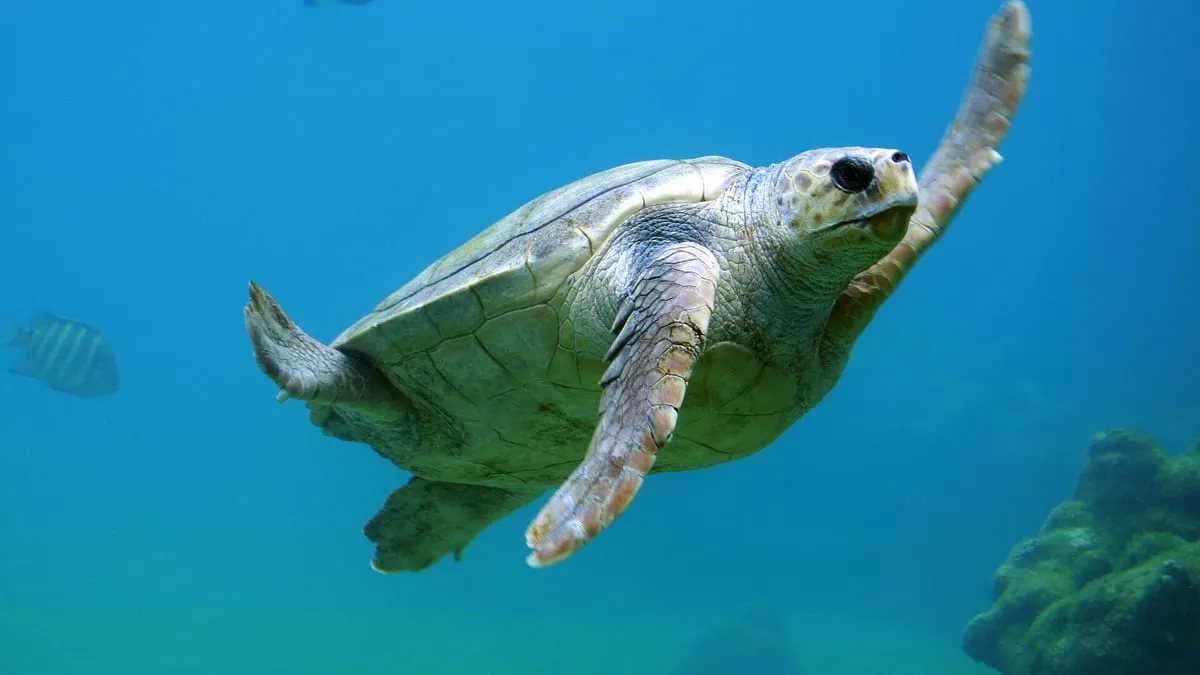
For most of recorded history, if you wanted to see a loggerhead turtle lay her eggs in the Mediterranean, you went east, to Greece, Turkey or Cyprus. The western half of the sea served mainly as a feeding ground for young animals.
That map is being redrawn. As the conservation news site Mongabay reported this week, loggerheads are now nesting regularly along coasts of Italy and Spain, moving toward France, and arriving on some of the most heavily developed tourist beaches in Europe.
“In the Western Mediterranean, we are observing an expansion of the population in real time,” said Sandra Hochscheid of the Stazione Zoologica Anton Dohrn in Naples, who follows the animals with satellite transmitters.
How the spread unfolded
Signs of nesting appeared in Calabria, at the toe of Italy, in the early 2000s, and they have since moved north along the Italian coast. Spain documented its first confirmed nest in 2001, and annual nesting there became regular in 2014. Campania, the region around Naples, now has established sites including Castel Volturno and Ascea.
Because female loggerheads tend to return to the beach where they first nested, these pioneers could found lasting colonies as their offspring come back to breed. Genetic work led by Carlos Carreras at the University of Barcelona suggests the new arrivals are related to populations from Greece, Turkey and even the Caribbean. Many Spanish nests are laid unusually close to the water, which Carreras reads as a sign of inexperienced mothers.
Why it is happening
Researchers have ideas but no firm answer. One possibility is that warmer water speeds the growth of juveniles feeding in the west, so that they reach maturity sooner. Another is that western beaches, once too cool for eggs to develop, have become warm enough. Hochscheid has suggested that crowding could be pushing turtles out of older feeding grounds, while cautioning that the cause remains unknown.
If warming is the driver, it comes with a catch. In sea turtles, sand temperature determines the sex of hatchlings, with hotter nests producing more females, and very high temperatures can kill the eggs outright. Beaches that are newly suitable now may not stay suitable, which would make these western sites valuable as older ones in the east heat up.
The conflict over the sand
Turtles chose a difficult neighborhood. Italy has roughly 27,000 private beach clubs, known as lidi, which take up about 43 percent of its beaches. In the early years, conservation groups reported locked gates, and club staff smoothing over nesting tracks before volunteers could find them, out of fear that a protected nest would hurt business. Such incidents were reported in Campania, Calabria and Tuscany.
Even without any ill will, ordinary beach operations pose a danger. Tractors that rake the sand before dawn can crush shallow egg chambers. Lights pose an even wider problem, since hatchlings find the sea by moving toward the brightest horizon. A 2026 study by Hochscheid’s team found that 87 percent of Campania nests in 2022 and 2023 were exposed to beachfront lighting, and about 82 percent needed active intervention to keep hatchlings from heading the wrong way.
Some minds are changing
Attitudes have started to shift. An EU-backed project called Life Turtlenest, launched in 2023 and coordinated by the Italian environmental group Legambiente, now links partners in Italy, Spain and France. Ascea has installed low-intensity lighting, and from 2027 low-impact lighting will be required for beach concessions there.
Commercial self-interest has played a part too. Pino Cappuccio, who runs a beach club in Ascea, says guests remember watching turtles nest or hatch during dinner. The town’s mayor, Stefano Sansone, describes environmental protection as “also an economic strategy.”
If you travel there
Anyone visiting these coasts in summer can help with a few simple habits. Keep lights and phone flashes off the beach at night, fill in holes and move sunbeds that could trap a turtle, and give any fenced nesting area plenty of room. If you see tracks that look like a tractor tire coming out of the water, tell local authorities or a conservation group rather than following them.