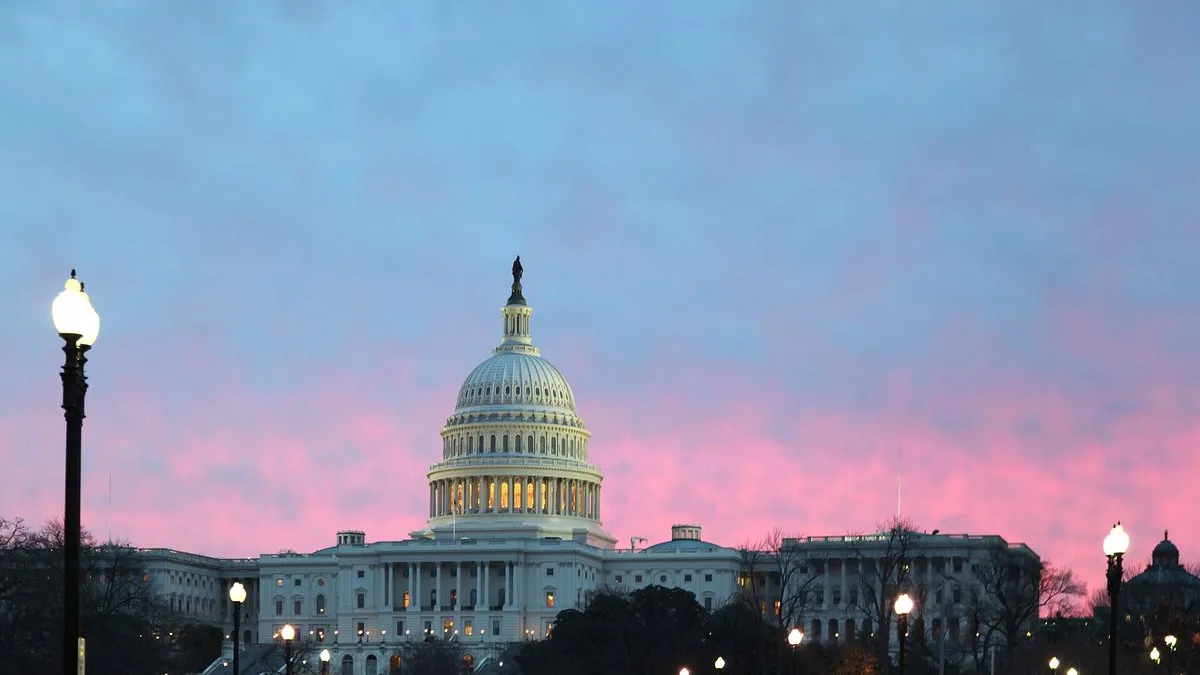
The House is expected to vote within days on whether to impeach Defense Secretary Pete Hegseth. Rep. Thomas Massie, a Kentucky Republican, filed articles of impeachment on the House floor on Monday, November 9, the day lawmakers returned to Washington after the midterm elections.
Massie used a procedure that makes his resolution “privileged,” which means party leaders must bring it up for action within two legislative days. Leaders cannot simply ignore it.
What the articles say
The 34-page resolution accuses Hegseth of “high crimes and misdemeanors” in eight articles, according to NPR and CBS News:
- Three say he waged war against Iran without authorization from Congress, in violation of the War Powers Resolution.
- One says he ignored laws meant to limit civilian casualties, pointing to an earlier strike that hit a school in Iran.
- One concerns strikes on boats in the Caribbean Sea and the eastern Pacific that the administration says carried drugs, which the resolution calls “extrajudicial killings.”
- One concerns the operation that captured Venezuela’s president, Nicolás Maduro, which Congress never approved.
- One concerns military action against Yemen, again under the War Powers Resolution.
- One accuses him of suppressing free speech through the Pentagon’s effort to punish Sen. Mark Kelly, an Arizona Democrat, over a video telling service members they can refuse illegal orders.
Why the vote is happening now
Massie first filed impeachment articles in September. Speaker Mike Johnson responded by sending the House home early, so the resolution expired before a vote. Massie reintroduced an updated version on Monday, restarting the clock.
The timing also reflects the election results. Massie lost his Republican primary earlier this year to Ed Gallrein, a candidate Hegseth campaigned for, and he leaves Congress in January. Democrats won the House majority in the midterms, and their leader, Hakeem Jeffries of New York, is in line to be the next speaker. Jeffries has signaled support for impeaching Hegseth.
Massie argued that impeachment “is just firing somebody, really,” adding that Democrats would be “very vicious” once they take control.
What Hegseth and Trump said
Hegseth dismissed the effort in a video posted last week, calling the resolution “sham articles of impeachment” filed by a “disgruntled, defeated congressman.” He said the effort “didn’t work against President Trump, and it won’t work with me.” He told reporters on Monday that “we’re not worried about that” and planned a news conference on Tuesday.
President Trump backed his defense secretary. “I’ll stand by him,” he told reporters on Monday.
Some Republicans who oppose impeachment have still criticized the administration. Rep. Warren Davidson of Ohio told NPR that impeaching Hegseth would be a mistake, since presidents of both parties going back decades have largely ignored Congress on war powers. He said lawmakers who want change should use their control over spending instead.
How the vote works
A privileged resolution does not guarantee an up-or-down vote on impeachment itself. House leaders can try to set it aside with a motion to table, or send it to a committee, as the House has done with several privileged impeachment resolutions in recent years. Those motions need a simple majority.
If the House instead votes on the articles and a majority approves at least one, Hegseth would be impeached. Under the Constitution, the Senate would then hold a trial. Removing him from office would take a two-thirds vote of senators present, a much higher bar.
NPR reported that there could be enough votes to impeach in the House, if all Democrats join Massie and a handful of other Republicans. Conviction in the Senate is considered unlikely.
What to watch
- Whether House Republican leaders move to table the resolution, and how many Republicans break with them.
- What Hegseth says at his news conference.
- Whether the debate turns into a broader fight over Congress’s war powers, which Massie says is the real issue. “What’s at heart here is the balance of power between the executive branch and Congress,” he told reporters.